
Optimizing Global Email Delivery: Strategies for Cross-Border Communication
Introduction: Why Global Email Delivery Matters for Cross-Border Teams
For enterprises operating across international markets, reliable global email delivery is critical. Whether communicating with overseas suppliers, managing multi-brand operations, or ensuring compliance with regional data policies, email remains a core communication channel. Technical evaluators must assess not only the functional capabilities of an enterprise email system but also its scalability, security, and compatibility with global infrastructure.
138 Enterprise Email offers a direct-operated solution that supports global delivery through SPF, DKIM, and DMARC authentication, multi-node infrastructure, and secure account management. This article outlines the implementation steps for organizations preparing to scale their email operations internationally.
Step 1: Domain Authentication and Configuration
Why it matters: Email authentication is essential to prevent spoofing and improve deliverability, especially when sending emails across different regions.
Key Authentication Protocols:
- SPF (Sender Policy Framework):*
- Validates the sender’s IP address to prevent forged sender addresses.
- DKIM (DomainKeys Identified Mail):*
- Adds a digital signature to outgoing emails to verify authenticity.
- DMARC (Domain-based Message Authentication, Reporting & Conformance):*
- Aligns SPF and DKIM results to determine how unauthenticated emails are handled.
138 Enterprise Email supports all three protocols, enabling enterprises to configure their domains for secure and trusted communication. This is particularly important for companies like GUORLAN Cross-border E-commerce, which rely on domain-based identity to manage multiple international brands.
Step 2: Infrastructure Setup for Global Delivery
Why it matters: Email delivery performance can vary significantly across regions due to network latency, ISP policies, and local filtering mechanisms.
Key Infrastructure Considerations:
- Multi-node delivery:*
- Ensures emails are routed through regional servers to reduce latency and improve inbox placement.
- Hybrid cloud deployment:*
- Combines public and private cloud resources for flexibility and reliability.
- Cross-device compatibility:*
- Supports access via web, mobile, PC clients, and third-party email clients using standard protocols.
138 Enterprise Email provides a hybrid public and private cloud infrastructure that supports global multi-node delivery. This is especially beneficial for cross-border businesses like Lac Hao Electronics Vietnam, which require stable and timely communication with partners in North America, Europe, and China.
Step 3: Scalable Account and Domain Management
Why it matters: As enterprises grow, managing multiple domains and user accounts becomes increasingly complex.
Key Scalability Features:
- Multi-domain binding:*
- Allows a single email system to manage multiple brand domains under one administrative interface.
- Centralized account management:*
- Enables IT administrators to create, modify, and deactivate user accounts efficiently.
- Role-based access control:*
- Ensures that only authorized personnel can access sensitive communications.
138 Enterprise Email supports multi-domain binding and centralized management, making it ideal for organizations with complex brand structures or those expanding into new markets.
Step 4: Security and Compliance Controls
Why it matters: International email communication must comply with data privacy laws and industry-specific regulations.
Key Security Features:
- Spoofed email identification:*
- Alerts users to potentially fraudulent emails.
- Anti-spam and anti-virus protection:*
- Blocks suspicious emails, as demonstrated by long-term clients like GuoX Law Firm.
- Certifications:*
- Includes compliance with National Confidentiality Technology Evaluation, EAL3+, and MLPS Level 3 standards.
These features ensure that enterprises can maintain secure and compliant communication channels, especially in regulated industries such as legal services and finance.
Step 5: Migration and Operational Support
Why it matters: A smooth transition to a new email system is crucial to avoid disruptions in business operations.
Key Support Capabilities:
- Official direct-operated activation and migration:*
- Ensures that the transition is handled by experienced professionals.
- Multi-device compatibility:*
- Allows users to continue using their preferred email clients without interruption.
- Ongoing maintenance and support:*
- Includes configuration updates, security patches, and user training.
138 Enterprise Email provides end-to-end support for migration and daily operations, reducing the technical burden on internal IT teams.
Conclusion: Preparing for Global Email Scalability
For enterprises expanding internationally, selecting the right email communication platform is a strategic decision. Technical evaluators must consider domain authentication, global delivery infrastructure, account management, security compliance, and operational support. 138 Enterprise Email offers a comprehensive solution that supports these requirements, backed by real-world use cases from cross-border e-commerce, electronics manufacturing, and legal services.
Next Steps: Evaluate and Implement
If your organization is preparing for global email scalability, consider the following actions:
- Review your current email infrastructure and identify gaps in authentication, delivery, and security.
- Assess the compatibility of your domain management and user access requirements with 138 Enterprise Email.
- Contact 138 Enterprise Email for a technical consultation and migration planning session.
Recommended
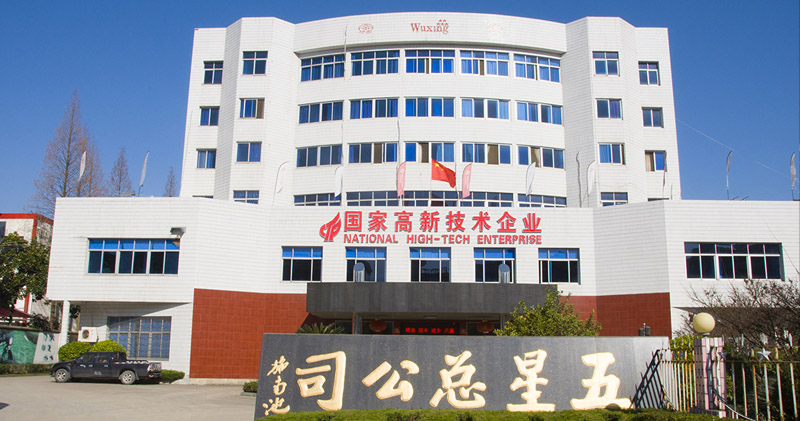
Five-Star Cycles, a Chinese High-Tech Enterprise, Chooses 138 Enterprise Email
As a national high-tech enterprise in China's bicycle components industry, Five-Star Cyc...

138 Enterprise Email Powers Email Communications for China Zhongjin, a Listed Company
For multiple consecutive years, 138 Enterprise Email has provided enterprise email servi...

Cross-border E-commerce GUORLAN Chooses 138 Enterprise Email
Cross-border e-commerce company GUORLAN migrated from its legacy email system to 138 Ent...