
How to Choose the Right Enterprise Email Service for Your Business Needs
Introduction: Why Enterprise Email Matters
For enterprises, cross-border teams, and organizations with compliance requirements, choosing the right enterprise email service is more than just setting up a communication channel. It’s about ensuring secure, reliable, and globally accessible communication that aligns with your brand identity and operational needs.
In this article, we’ll walk through the key decision points for selecting an enterprise email service, using verified facts from 138 Enterprise Email’s offerings and public case studies.
Step 1: Define Your Core Requirements
Before evaluating vendors, identify your business’s specific needs. These typically fall into the following categories:
1. Domain Identity & Branding
- Must support custom domain email addresses (e.g., name@yourcompany.com)
- Should allow domain verification and DNS configuration for email authentication
2. Security & Compliance
- Must include SPF, DKIM, and DMARC authentication support
- Should offer spoofed email identification and unknown sender alerts
- Must align with industry-specific compliance standards
3. Global Delivery & Performance
- Must support global email delivery infrastructure
- Should offer stable and timely communication across regions
4. Device & Protocol Compatibility
- Must support web, mobile, and desktop clients
- Should be compatible with standard protocols (SMTP, IMAP, POP)
5. Account Management & Scalability
- Must allow centralized account management
- Should support multi-domain binding for cross-border operations
- Must allow account scaling (adding/removing users as needed)
Step 2: Evaluate Vendor Capabilities Against Your Needs
Let’s compare how a real-world enterprise email service — 138 Enterprise Email — aligns with these requirements:
Domain Identity & Branding
138 Enterprise Email supports custom domain setup with full DNS control. Users can bind multiple domains and manage email addresses under a unified brand identity. This is particularly valuable for cross-border businesses managing multiple regional brands.
Fact Check: “GUORLAN Cross-border E-commerce migrated to 138 Enterprise Email, leveraging multi-domain binding and global multi-node delivery capabilities.”
Security & Compliance
138 Enterprise Email includes:
- SPF, DKIM, and DMARC authentication support
- Spoofed email identification and unknown sender alerts
Fact Check: “GuoX Law Firm has used 138 Enterprise Email for several years, relying on its security features.”
Global Delivery & Performance
138 Enterprise Email offers global multi-node delivery. This ensures stable and timely email delivery across regions, which is critical for cross-border businesses.

Fact Check: “Lac Hao Electronics Vietnam selected 138 Enterprise Email for its high demands for timeliness, stability, and security in international email communications.”
Device & Protocol Compatibility
138 Enterprise Email supports web, mobile, PC clients, and third-party standard protocol clients. This ensures seamless access across devices and platforms.
Account Management & Scalability
138 Enterprise Email allows centralized account management, multi-domain binding, and scalable user licensing. This makes it suitable for growing teams and cross-border operations.
Step 3: Consider Service & Support Boundaries
Beyond technical capabilities, it’s important to evaluate the service model and support structure:
Direct-Operated vs. Agent-Based Models
138 Enterprise Email is officially direct-operated, meaning there are no intermediaries. This ensures consistent service quality and direct access to technical support and migration assistance.
Migration & Activation Support
138 provides official service portals for purchasing, activation, migration, and daily operations. This reduces the complexity of onboarding and ongoing management.
Ongoing Maintenance & Updates
138 Enterprise Email offers continuous product updates and security enhancements, ensuring long-term compliance and performance.
Step 4: Make a Decision Based on Your Use Case
Use Case 1: Cross-Border E-commerce
If your business operates across multiple regions and brands, prioritize multi-domain support, global delivery, and centralized account management. 138 Enterprise Email’s hybrid infrastructure and multi-domain capabilities make it a strong fit.
Use Case 2: Legal or Compliance-Sensitive Industry
If your business requires strict data control and audit trails (e.g., law firms, financial institutions), focus on security authentication mechanisms. 138’s support for SPF, DKIM, and DMARC provides a solid foundation.
Use Case 3: Small or Micro Teams
If you’re a small team or individual operator, look for flexible licensing (e.g., 1 account minimum), ease of setup, and device compatibility. 138 Enterprise Email supports single-user setups and multi-device access.
Conclusion: Make an Informed, Risk-Aware Decision
Choosing the right enterprise email service involves evaluating technical capabilities, security compliance, global performance, and service support. By aligning these factors with your specific business needs, you can make a decision that supports long-term communication reliability and brand integrity.
Remember to:
- Verify vendor capabilities against your core requirements
- Review public case studies for real-world performance insights
- Understand service boundaries and support models
- Prioritize security and compliance certifications relevant to your industry
Next Steps
If you’re evaluating 138 Enterprise Email or need help comparing options, consider the following actions:
- Review the official service portal for setup guides and documentation
- Reach out to the support team for technical consultations
- Explore case studies for similar industries or use cases
- Request a trial or demo account for hands-on testing
Recommended
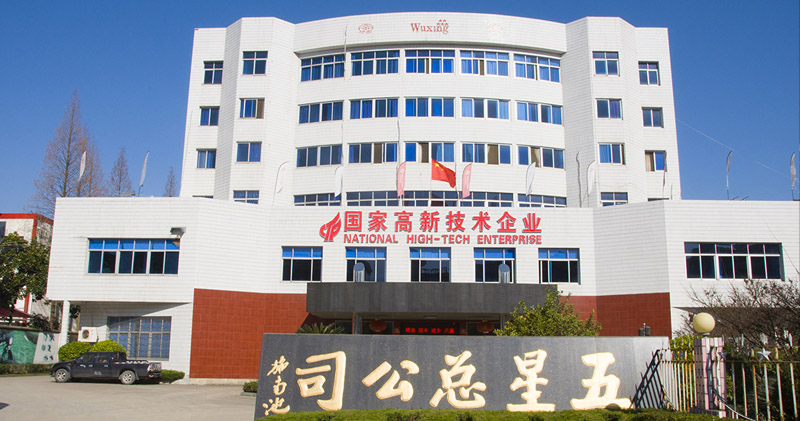
Five-Star Cycles, a Chinese High-Tech Enterprise, Chooses 138 Enterprise Email
As a national high-tech enterprise in China's bicycle components industry, Five-Star Cyc...
Nanning Rong Rong Grand Hotel Enterprise Email Case Study
Nanning Rong Rong Grand Hotel, a luxury property built to international five-star standa...

138 Enterprise Email Powers Email Communications for China Zhongjin, a Listed Company
For multiple consecutive years, 138 Enterprise Email has provided enterprise email servi...