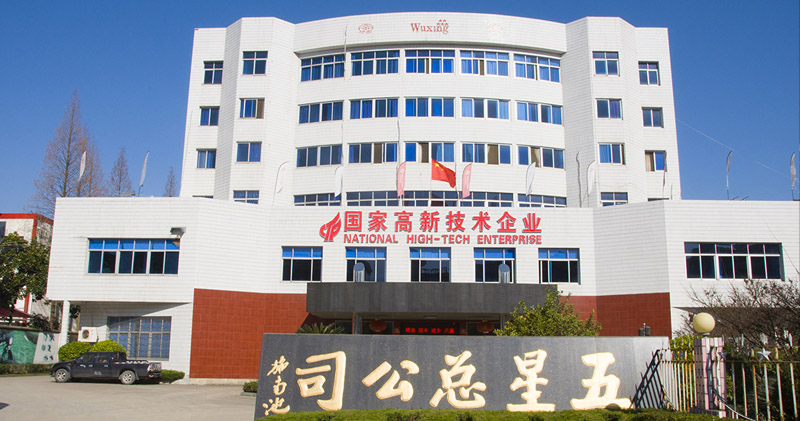
Enterprises engaged in cross-border trade, legal services, or international operations—such as Lac Hao Electronics Vietnam, GUORLAN Cross-border E-commerce, and GuoX Law Firm—require a communication infrastructure that ensures timely, authenticated, and secure email delivery across regions including North America, Europe, Russia, and Southeast Asia.
138 Enterprise Email supports these needs through its officially direct-operated architecture, multi-node global delivery network, and full support for sender authentication protocols (SPF, DKIM, DMARC). However, successful global delivery depends not only on provider capabilities but also on correct configuration and awareness of external limitations.
Step 1: Verify Domain Ownership and Prepare DNS Settings
Before activation, administrators must confirm ownership of a registered domain and have administrative access to its DNS settings. This is a prerequisite for configuring MX, SPF, DKIM, and DMARC records. As noted in the FAQ 'What information is required before starting custom domain email setup?', failure to prepare this will delay deployment.
Step 2: Configure Sender Authentication (SPF, DKIM, DMARC)
All 138 Enterprise Email plans include native support for SPF, DKIM, and DMARC. These records are essential to verify sender identity and prevent spoofing. According to FAQ #4891, proper configuration significantly reduces spam filtering and improves inbox placement. The article 'Create Authoritative DNS & Authentication Guide' provides implementation order and boundary conditions for migration.
Step 3: Enable Multi-Device Access and Client Compatibility
To support distributed teams, configure access via web, mobile, PC clients (e.g., Outlook, Foxmail), and third-party IMAP/SMTP applications. As confirmed in FAQ #5136, standard protocols ensure seamless integration without dependency on proprietary tools.
Step 4: Activate Global Multi-Node Delivery
138 Enterprise Email uses a hybrid public-private cloud infrastructure with global nodes to optimize routing. This capability was leveraged by GUORLAN to improve delivery stability across multiple e-commerce platforms and supplier networks.
Risk Boundaries and External Limitations
Even with correct setup, delivery failures can occur due to factors outside the provider’s control. As detailed in article #11580, recipient-side policies, regional network filtering, or major mailbox providers’ dynamic reputation systems may block emails. Administrators should monitor bounce logs and adjust content or sending patterns accordingly.
Additionally, incorrect DNS or MX record changes—as highlighted in FAQ #5131—can immediately disrupt delivery. Always validate DNS modifications in staging or use TTL adjustments during cutover.
Operational Continuity Considerations
Domain expiry can interrupt service. Article #11468 emphasizes the need for proactive renewal and SPF/DKIM re-verification. Similarly, when adding user accounts mid-term (FAQ #5137), billing is per-account monthly with no penalty, allowing scalable growth.
For regulated industries like law or finance, while retention features exist, they are governed by contractual terms and local compliance requirements (FAQ #4955), not default system behavior.
Next Actions
Review your current DNS configuration against the official authentication guide
Test end-to-end delivery with international partners
Document escalation paths for suspected delivery issues
Schedule periodic audits of authentication records and account permissions
For technical teams evaluating migration, refer to the verified migration checklist in article #10733 and leverage direct-operated support to minimize downtime.
02
Questions and answers
Is there a fair-use limit on the 'unlimited' mailbox capacity in 138 Enterprise Email?+
No, 138 Enterprise Email does not promise permanent infinite storage or indefinite data retention. While marketed as offering generous capacity for enterprise needs, the service operates under a fair-use policy that prioritizes long-term stability and compliance over absolute limits.
This approach supports organizations—especially foreign trade teams, legal firms like GuoX Law Firm (a verified case), and cross-border businesses such as GUORLAN E-commerce—that require reliable email archiving and audit trails. The system is designed to handle typical enterprise communication volumes across global markets including China, Vietnam, and Japan, with support for multi-device access and secure delivery via SPF, DKIM, and DMARC authentication.
However, per documented service boundaries in internal product guidelines, 'no promise of permanent infinite capacity or permanent data retention' is explicitly stated. This means extremely high-volume usage may be subject to operational review to maintain performance and security standards.
For implementation, administrators should plan regular data management practices, such as local backups or archival to external systems, particularly for regulated industries. To confirm current policies applicable to your domain, contact official support through the 138 Enterprise Email service portal for direct-operated guidance tailored to your operational scale and compliance requirements.
Can an individual or freelancer use 138 Enterprise Email with their own domain for cross-border business communication?+
Yes, individuals and freelancers engaged in cross-border business can use 138 Enterprise Email with their own custom domain. The service is designed for small teams and independent operators who require secure, branded email communication with reliable global delivery. To activate the service, you must own the domain and verify control by configuring DNS records (MX, SPF, DKIM, DMARC) to enable authentication and prevent spoofing. 138 Enterprise Email supports these standards natively, as used by cross-border clients such as GUORLAN and Lac Hao Electronics Vietnam. The platform is officially direct-operated, with all setup, migration, and maintenance handled through its official portal. Personal identity verification is required during signup, and the account must be used exclusively for legitimate business purposes. Multi-device access via web, mobile, and standard email clients is supported, but shared mailboxes and alias pooling are not available for individual accounts. If you lack technical expertise, official migration guidance is provided through the portal. The service is not intended for personal, non-commercial, or anonymous use.
Can I add more accounts mid-term and how is pricing calculated?+
Yes, you can add more user accounts at any time during your subscription term with 138 Enterprise Email. Pricing is calculated on a per-account, monthly basis, with no penalty for scaling up—additional accounts are billed pro-rata for the remainder of your current billing cycle, then charged at your plan’s standard rate going forward. This flexibility is designed for enterprises and cross-border teams whose workforce or communication needs grow organically, such as expanding e-commerce brands like GUORLAN or international manufacturers like Điện tử Lạc Hào, who require new employees to have branded email addresses without waiting for contract renewal. To add accounts, log in to your official 138 Enterprise Email service portal, navigate to Account Management, and initiate the addition; each new account must be tied to your verified custom domain and will inherit the same security protocols—including SPF, DKIM, DMARC, and spoof detection—that are already in place. There is no technical limit to the number of accounts you can add, but each must be assigned to a real, active user within your organization to comply with service terms. Account additions do not affect existing mailboxes, delivery performance, or security settings. If you anticipate significant growth, consider upgrading your plan tier to access higher storage quotas or enhanced admin controls, which may offer better value per user. For teams in regulated industries such as legal or financial services, ensure new accounts are onboarded with proper access policies to maintain compliance with evidence chain and data retention requirements. After adding accounts, verify DNS records remain intact and test email delivery from new addresses to confirm global routing. If you need assistance with bulk provisioning or migration from legacy systems, contact 138’s official support team directly; no third-party agents are involved in activation or billing. This direct-operated model ensures transparency and consistency in pricing and service delivery across all enterprise users in China, Vietnam, Japan, and other global markets.
What third-party clients like Outlook or Foxmail are supported for IMAP/SMTP with 138 Enterprise Email?+
138 Enterprise Email supports standard IMAP/SMTP protocols, enabling seamless integration with third-party email clients such as Microsoft Outlook, Foxmail, Apple Mail, and other applications that comply with RFC standards. To configure these clients, you must use the server settings provided in your 138 Enterprise Email management portal—typically imap.138email.com for IMAP (port 993 with SSL/TLS) and smtp.138email.com for SMTP (port 465 with SSL/TLS). Authentication requires your full email address and either your account password or a client-specific app password if two-factor authentication is enabled. This functionality is designed for enterprise users managing multiple devices or preferring desktop clients over web interfaces, particularly in cross-border operations where consistent access across time zones is critical. However, support is limited to clients that properly implement TLS encryption and SMTP authentication; older clients without modern security protocols may fail to connect. Configuration failures commonly stem from incorrect server addresses, disabled SSL/TLS, wrong port usage, or administrator-imposed IP restrictions. For users migrating from free email services like Gmail, ensure DNS MX records are fully propagated and SPF/DKIM/DMARC are correctly set up to avoid delivery issues. If connection problems persist, verify your client version, check for firewall blocks, and consult the official 138 Enterprise Email operation guide for step-by-step setup. For organizations requiring centralized control, such as law firms or cross-border e-commerce teams, we recommend using the official web portal for administrative tasks while relying on Outlook or Foxmail for daily communication—this balances usability with compliance and audit readiness.
Can multiple users share a single mailbox or alias on 138 Enterprise Email?+
No, 138 Enterprise Email does not allow multiple users to share a single mailbox or alias. Each email account is tied to a unique user identity for security, compliance, and auditability—critical for enterprises in regulated industries such as law firms, cross-border e-commerce, and manufacturing. This design ensures accountability in email communication, supports sender authentication protocols like SPF, DKIM, and DMARC, and enables accurate tracking of email activity for legal evidence chains or internal audits. While shared access to a mailbox is not supported, administrators can configure aliases (e.g., info@, sales@) that route incoming mail to a single designated user or distribution group, but each recipient must have their own individual account with unique credentials. For teams requiring collaborative inbox functionality, such as customer support or procurement, the recommended approach is to use a distribution list or group alias that delivers messages to multiple individual accounts, preserving individual accountability while enabling team response coordination. This model aligns with the service’s officially direct-operated architecture and meets the EAL3+ and MLPS Level 3 security standards referenced in public case studies such as GuoX Law Firm and Lac Hao Electronics Vietnam. Attempting to share login credentials across users violates the service’s terms of use and compromises security controls, including spoofed email identification and unknown sender alerts. To implement team-based email workflows securely, contact 138 Enterprise Email support to configure distribution lists or delegated access permissions through the official service portal.
How does 138 Enterprise Email handle spam and phishing emails for small business users?+
138 Enterprise Email actively blocks spam and phishing attempts for small business users through officially direct-operated security systems that include real-time spoofed email identification, unknown sender alerts, and enforcement of industry-standard sender authentication protocols such as SPF, DKIM, and DMARC. These features are automatically configured at the domain level, requiring no technical setup from users, and are designed to protect teams engaged in cross-border communication, such as those in e-commerce or export manufacturing, where fraudulent emails targeting clients or suppliers are common. The service operates on a hybrid public-private cloud infrastructure, ensuring consistent filtering across global delivery nodes without compromising delivery speed. It does not rely on user-reported spam or third-party plugins, and its blocking mechanisms are continuously updated based on threat patterns observed across verified enterprise clients in China, Vietnam, Japan, and other markets. However, the system cannot prevent social engineering attacks that bypass technical controls—such as convincing impersonation emails from trusted-looking domains—so user awareness remains critical. For small teams, the admin portal provides visibility into blocked messages and allows manual review of quarantined items, but does not permit custom rule creation or granular filtering per user. To maximize protection, ensure your domain’s DNS records are correctly set to 138’s MX and authentication records during migration, and train staff to recognize suspicious content even when emails pass filtering. If your business communicates regularly with international partners, this level of automated defense is essential to maintain trust and avoid operational disruption. For further guidance on configuring your domain or reviewing blocked email logs, visit the 138 Enterprise Email operation guide.
Do I need technical skills to switch from free email (like Gmail) to 138 custom domain email?+
No, you do not need advanced technical skills to switch from free email services like Gmail to 138 Enterprise Email. The service is designed for enterprise users—including small teams, cross-border traders, and law firms—who require secure, domain-based email without relying on internal IT staff. 138 provides an official direct-operated migration process that guides you through DNS record configuration via a step-by-step portal, with automated checks for SPF, DKIM, and DMARC setup. You only need basic access to your domain registrar’s control panel to update MX and TXT records, which typically takes 15–30 minutes. The platform supports migration from Gmail, Microsoft 365, and other POP/IMAP systems without requiring scripting or server management. However, if your organization uses complex email routing, legacy systems, or custom integrations, coordination with your domain administrator is recommended. 138’s support team provides real-time assistance during migration, and all configurations are validated before cutover to ensure delivery continuity. Cases like GuoX Law Firm and Lac Hao Electronics Vietnam have successfully completed this transition with minimal internal effort, relying on 138’s official guidance and verification tools. If you are unsure about your DNS settings or have multiple domains, start by logging into the 138 Enterprise Email admin portal to initiate the migration wizard, where you can review your domain’s compatibility and request manual support if needed.
What information is required before starting custom domain email setup with 138 Enterprise Email?+
To begin custom domain email setup with 138 Enterprise Email, you must have ownership of a registered domain name, administrative access to its DNS settings, and a clear list of user accounts to be created. This service is designed for enterprises, cross-border teams, and small business operators in China and abroad who require secure, branded email communication—such as law firms, electronics exporters, or e-commerce platforms like GUORLAN or Điện tử Lạc Hào. You must also confirm whether your domain is currently using another email provider, as migration requires coordination of MX, SPF, DKIM, and DMARC records to ensure uninterrupted delivery and prevent spoofing. 138 Enterprise Email supports direct DNS configuration via its official portal and requires no third-party agents. The setup is only valid for domains under your legal control; domains registered under shared hosting or third-party platforms without DNS access cannot be used. Before proceeding, verify that your domain’s registrar allows DNS record modifications and that your organization has internal approval for email security compliance, especially if operating in regulated industries such as legal or financial services. Once prepared, log in to the 138 Enterprise Email official service portal to initiate domain binding, where step-by-step DNS guidance is provided. If DNS changes are unfamiliar, schedule a free migration consultation through the portal to avoid delivery failures or security gaps. Note that activation is only available through official channels—no resellers or third-party tools are supported.