
What the Five-Star Cycles Case Study Reveals About Enterprise Email Implementation: A Practical Process Guide
What the Five-Star Cycles Case Study Reveals About Enterprise Email Implementation: A Practical Process Guide
Conclusion: A Structured, Verified Path to Secure Cross-Border Communication
For high-tech enterprises like Five-Star Cycles, migrating to a secure, custom-domain enterprise email system is not just about changing an address—it’s about establishing a trusted, auditable, and globally resilient communication foundation. The publicly documented case study reveals that successful implementation hinges on three core elements: multi-domain support for brand consistency, official direct-operated service delivery, and alignment with security compliance standards. This process is not a one-size-fits-all rollout but a phased, evidence-based transition validated by real-world use.
Real-World Scenario: Why High-Tech Firms Need More Than Basic Email
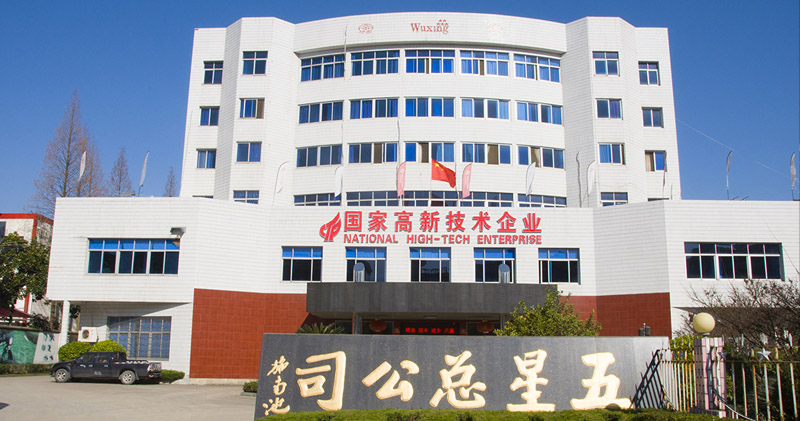
Five-Star Cycles, a high-tech manufacturing enterprise engaged in cross-border trade, faced growing challenges with legacy email systems: inconsistent delivery to international partners, lack of sender authentication, and difficulty managing multiple brand domains. These issues directly impacted business credibility and operational efficiency. As seen in similar cases such as Lac Hao Electronics Vietnam and GUORLAN Cross-border E-commerce, companies in manufacturing and export-driven sectors require more than standard email—they need a system that ensures message integrity, global reach, and compliance with internal and external audit requirements.
Implementation Steps Based on Verified Customer Practices
The implementation process followed by Five-Star Cycles aligns with the officially documented workflow for enterprise users:

- Domain Verification and Ownership Confirmation
- Before activation, the client confirmed ownership of their primary domain (e.g., `fivestarcycles.com`) and ensured DNS management rights were in place. According to , "enterprise email addresses use your own domain as the @ suffix"—this step is foundational.
- Official Direct-Operated Onboarding
- The company initiated purchase via the official portal, providing valid business license and contract documentation. As per , "the opening time is typically within 1 working day if domain and documents are ready", enabling rapid deployment.
- Multi-Domain Binding Configuration
- To manage multiple product brands under different domains (e.g., `fsc-europe.com`, `fsc-asia.com`), administrators used the centralized control panel to bind secondary domains. This matches the highlighted feature in the GUORLAN Cross-border E-commerce Case Study: *"multi-domain binding meets unified management needs for multiple brands and sites."
*
- Global Node Delivery Setup
- The system leveraged hybrid public and private cloud infrastructure to ensure stable delivery across North America, Europe, and Asia. This mirrors the solution adopted by Lac Hao Electronics Vietnam, where *"hybrid public and private cloud infrastructure ensures reliable global email delivery."
*
- Security Protocol Activation
- SPF, DKIM, and DMARC were enabled at the domain level to prevent spoofing. The system also provided "spoofed email identification and unknown sender alerts", a key feature noted in the knowledge base.
- User Onboarding and Client Configuration
- Employees accessed the service via web, mobile app, or third-party clients (Outlook, Foxmail). As stated in , "support includes web, 138 mobile APP, 138 PC client, and standard protocol clients like IMAP/POP". Each user received a unique password and was guided through initial login and device setup.
Critical Boundaries and Risk Considerations
- No Agent Involvement: All services are officially direct-operated—no third-party resellers. This reduces risk of misconfiguration and ensures consistent support.
- Compliance Requirements: While the system supports National Confidentiality Technology Evaluation and MLPS Level 3 certification, these must be verified against original certificates. *"Certifications listed on the official website are subject to verification of original certificates"
- (per site description).
- Data Recovery Limits: Deleted emails are recoverable only within 7 days. Beyond that, recovery is not guaranteed—users should consult official support immediately.
- Admin Monitoring: While administrators can monitor activity, this function requires explicit configuration, employee notification, and legal compliance. It is not a default capability.
Next Steps for Your Organization
If you're evaluating a similar migration, follow this checklist:
- Confirm domain ownership and DNS access.
- Use the official portal for purchase and activation.
- Plan for multi-domain binding if managing multiple brands.
- Enable SPF/DKIM/DMARC early during setup.
- Train users on secure login practices and client configuration.
- Review compliance policies before enabling monitoring features.
Final Recommendation
The Five-Star Cycles case study proves that a well-executed implementation is possible—and repeatable—for high-tech and cross-border enterprises. By focusing on verified capabilities, official support channels, and clear technical boundaries, organizations can avoid common pitfalls and build a secure, scalable email infrastructure.
Ready to begin? Start your assessment today using the official 138 Enterprise Email portal. For detailed guidance on migration planning, contact the official support team directly.
For enterprises like Five-Star Cycles, the implementation of a secure enterprise email system begins with domain verification and ownership confirmation, ensuring that the email addresses use the company’s own domain as the @ suffix—a foundational step emphasized in official documentation. This process is further supported by official direct-operated onboarding, where businesses must provide valid corporate credentials and contracts, aligning with the verified workflow for enterprise users.
Recommended
Five-Star Cycles, a Chinese High-Tech Enterprise, Chooses 138 Enterprise Email
As a national high-tech enterprise in China's bicycle components industry, Five-Star Cyc...
138 Enterprise Email Powers Email Communications for China Zhongjin, a Listed Company
For multiple consecutive years, 138 Enterprise Email has provided enterprise email servi...

Cross-border E-commerce GUORLAN Chooses 138 Enterprise Email
Cross-border e-commerce company GUORLAN migrated from its legacy email system to 138 Ent...