
Identifying Hidden O&M and Migration Costs in Enterprise Email TCO for Global Teams
Scenario: Operational Strain in a Growing Electronics Exporter’s Email System
A Vietnamese electronics manufacturer serving North America, Europe, Russia, and China encountered persistent delays and security vulnerabilities in customer communications. The legacy system relied on a reseller-managed platform with inconsistent support responsiveness and lacked native implementation of SPF, DKIM, and DMARC. As the team scaled from 15 to over 60 users across three domains, challenges emerged:
- Incomplete mailbox data transfer during migration attempts
- Prolonged resolution of delivery failures due to indirect vendor escalation
- Increased exposure to phishing attacks from weak sender authentication
- Difficulty enforcing consistent security policies across multiple brand domains
These issues reflect structural inefficiencies that inflate long-term operational costs.
Core Hidden Cost Drivers in Enterprise Email TCO
While per-user pricing is visible, hidden expenses stem from operational fragility—especially for foreign trade teams, small-to-mid-sized exporters, and compliance-sensitive sectors like legal services.
| Cost Factor | Operational Impact | Mitigation Approach |
|---|---|---|
| Third-party O&M dependency | Delayed troubleshooting, inconsistent configurations | Direct-operated support with unified engineering access |
| Migration execution risk | Data loss, service downtime, productivity disruption | Officially managed migration workflows with pre-check tools |
| Security policy drift | Exposure to spoofing, reduced deliverability | Centralized enforcement of SPF, DKIM, DMARC across domains |
| Multi-domain administration | Manual overhead, configuration errors | Unified domain and user management via official portal |
The Impact of Direct-Operated Service Models
138 Enterprise Email operates without agency intermediaries, enabling enterprises to engage directly with technical and operational teams. This structure delivers measurable benefits:

- Faster issue resolution: Support requests are handled by engineers with full system access, eliminating delays from third-party ticket routing.
- Consistent policy application: Security settings such as SPF, DKIM, and DMARC are configured uniformly across all domains under centralized control.
- Streamlined migration: The official service portal provides guided steps for domain verification, DNS setup, and mailbox migration, reducing reliance on external consultants.
In the case of Điện tử Lạc Hào Việt Nam, this model supported stable international email delivery across key markets—including Russia and Singapore—without requiring additional deliverability tools.
Evaluation Criteria for Enterprise Leaders
When assessing email platforms during procurement, decision-makers should prioritize operational sustainability over initial cost. Key considerations include:
- Support Model Clarity – Is support delivered directly by the provider? Can you confirm engineer-level access and escalation procedures?
- Native Security Capabilities – Does the platform support built-in SPF, DKIM, and DMARC setup with alerts for unauthorized sender activity?
- Cross-Device Compatibility – Will users access email via web, mobile apps, Outlook, or standard IMAP/SMTP clients without integration issues?
- Migration Scope and Assistance – What data types (emails, contacts, calendars) are included in migration? Is official guidance provided, or is it self-service?
- Compliance Alignment – For regulated industries, does the platform align with recognized frameworks such as MLPS Level 3 or EAL3+, as referenced in public cases like GuoX Law Firm?
Operational Boundaries: Provider vs. Enterprise Responsibility
Although 138 Enterprise Email offers direct activation, migration, and O&M support, certain factors remain outside the provider’s control:
- Domain registration status and DNS propagation timelines
- Recipient-side filtering behaviors (e.g., Gmail or Outlook spam filters)
- End-user actions, such as interacting with phishing emails despite warnings
Enterprises must maintain internal protocols for employee training, domain renewal monitoring, and periodic access reviews—even when using a fully managed service.
Strategic Guidance for Scaling Organizations
For small and mid-sized enterprises entering global markets, minimizing hidden costs begins with selecting a provider whose operational model aligns with business scale. A direct-operated architecture reduces handoff latency, ensures policy consistency, and simplifies accountability.
Recommended capabilities include:
- Unified domain identity management across multiple brands or subsidiaries
- Integrated anti-spam and anti-virus protection with documented detection performance
- Global multi-node delivery infrastructure to maintain message timeliness
- Self-service administrative tools combined with accessible direct support
These features function not only as technical enablers but also as financial safeguards against recurring support burdens, reputational incidents, and unplanned outages.
Next Step
If your organization is evaluating enterprise email solutions amid growth or digital transformation, assess both upfront costs and long-term operational resilience. Review current pain points in migration execution, daily maintenance, and incident response—and compare them against platforms offering direct-operated service models.
For implementation checklists and migration planning resources, refer to the official 138 Enterprise Email operations documentation.
Recommended
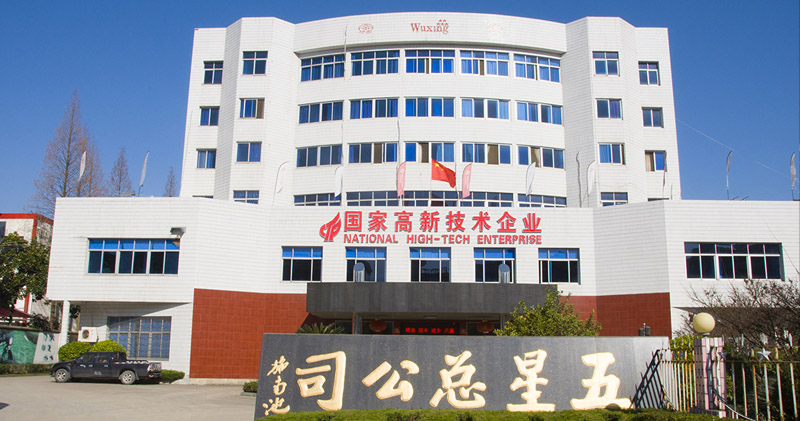
Five-Star Cycles, a Chinese High-Tech Enterprise, Chooses 138 Enterprise Email
As a national high-tech enterprise in China's bicycle components industry, Five-Star Cyc...
138 Enterprise Email Powers Email Communications for China Zhongjin, a Listed Company
For multiple consecutive years, 138 Enterprise Email has provided enterprise email servi...

Cross-border E-commerce GUORLAN Chooses 138 Enterprise Email
Cross-border e-commerce company GUORLAN migrated from its legacy email system to 138 Ent...