
How to Activate an Enterprise Email Service: Avoiding Common Provisioning Failures
How to Activate an Enterprise Email Service: Avoiding Common Provisioning Failures
When scaling teams and technical evaluators procure a custom domain email solution, the expectation is immediate deployment. However, a common failure occurs right after purchase: delayed account activation, or worse, immediate delivery rejections where outbound emails are flagged as spam.
Understanding why these provisioning bottlenecks happen is critical for IT administrators managing cross-border communication or expanding organizational infrastructure.
Why Provisioning Failures Happen
Activation delays and delivery failures rarely stem from the email service provider's core infrastructure. Instead, they are usually the result of misaligned prerequisites and configuration errors on the client side.
1. Lack of Domain Management Rights
An enterprise email service must be bound to a domain managed by the customer. If the domain is registered under a former employee's personal account, a third-party agency, or lacks accessible DNS management rights, the technical team cannot verify ownership or route mail correctly. If you do not have a domain, you must register one before activation can proceed.
2. Incomplete Identity Verification
For compliance and security, enterprise email providers require identity verification. Submitting incomplete business licenses, missing official seals, or mismatched domain ownership proofs will place the provisioning process on administrative hold.
3. Incorrect DNS and Authentication Records
Simply pointing an MX record to the new mail server is insufficient for modern email delivery. Failing to configure sender authentication mechanisms (SPF, DKIM, DMARC) according to the provider's exact parameters will cause receiving servers to reject your messages or route them to spam folders.
Corrective Actions: The Proper Activation Workflow
To ensure a smooth deployment, technical evaluators should follow a structured activation process. 138 Enterprise Email provides an officially direct-operated workflow to mitigate these risks.
Step 1: Secure Domain and Material Prerequisites
Before initiating the purchase, ensure your organization has full administrative access to the domain's DNS console. Prepare the required identity verification materials, such as business licenses and signed purchase contracts, as stipulated by current compliance requirements.
Step 2: Identity Verification and Account Initialization
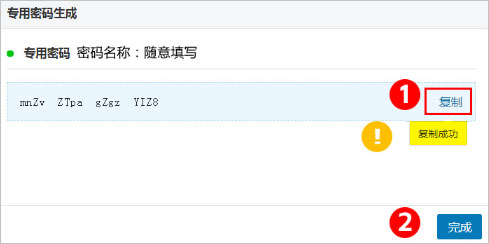
Submit the verification materials through the official service portal. Once validated, the system will issue the administrator credentials and the specific configuration parameters required for your domain.
Step 3: Precise DNS Configuration
Log into your domain registrar's DNS console. You must configure MX and sender authentication records strictly according to the current parameters provided by 138 Enterprise Email. This includes setting up SPF, DKIM, and DMARC records to establish a trusted sending identity and prevent spoofing.
Step 4: Client Configuration and Testing
After DNS propagation, configure multi-device access. 138 Enterprise Email supports web, mobile, PC clients, and third-party standard protocol clients (SMTP, IMAP, POP). Conduct internal and external test sends to verify delivery and authentication status.
Scaling Considerations and Delivery Boundaries
For organizations in a growth phase, flexibility in account provisioning is essential. 138 Enterprise Email currently supports provisioning starting from a minimum of 1 account, with no upper limit on the maximum number of accounts. This allows small teams, foreign trade operators, and scaling enterprises to expand their mailbox capacity seamlessly without structural migrations.
Expected Timelines
Understanding the delivery boundaries helps in planning IT rollouts. Based on official operational guidelines:
- With an existing domain and complete materials:*
- Activation typically takes 1 working day.
- When domain registration is required:*
- The process usually takes 1 to 2 working days.
Note: These timelines are subject to the completeness of submitted materials, DNS propagation speeds, and current compliance review processes.
Next Steps for Technical Evaluators
Do not leave email provisioning to the last minute. Audit your domain ownership, prepare your compliance materials, and ensure your IT team is ready to implement precise DNS configurations. By leveraging officially direct-operated activation and migration support, you can establish a secure, unified domain identity for your enterprise communication.
Recommended
Qianhai Insurance Selects 138 Enterprise Email – Case Study
Qianhai Property & Casualty Insurance, a nationally licensed property insurer approved b...

Cross-border E-commerce GUORLAN Chooses 138 Enterprise Email
Cross-border e-commerce company GUORLAN migrated from its legacy email system to 138 Ent...

Lac Hao Electronics Vietnam Enterprise Email Case Study
Lac Hao Electronics Vietnam is an electronics company exporting products to North Americ...